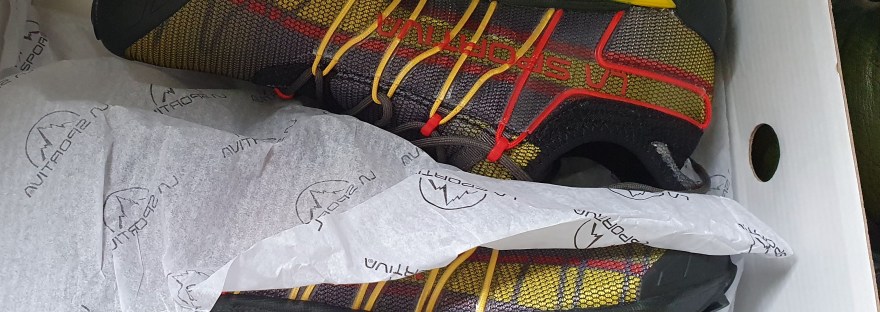
Plenty of runners will tell you that there’s nothing quite like unboxing a new pair of trainers. That first glimpse of a pristine, never-before-worn pair of kicks that will, of course, elevate your running from slow plodder, to blazing speed-merchant.
Sadly, the new trainer high only lasts a mere moment. If you talk to a trail runner – minutes. Mud covered and bashed up tends to be the norm, but there’s a whole other world of trainer politics to be discussed if you scratch beneath the surface. Should we keep buying new shoes? What happens to the old ones? Do I need better grip? Should I be running barefoot the whole time?
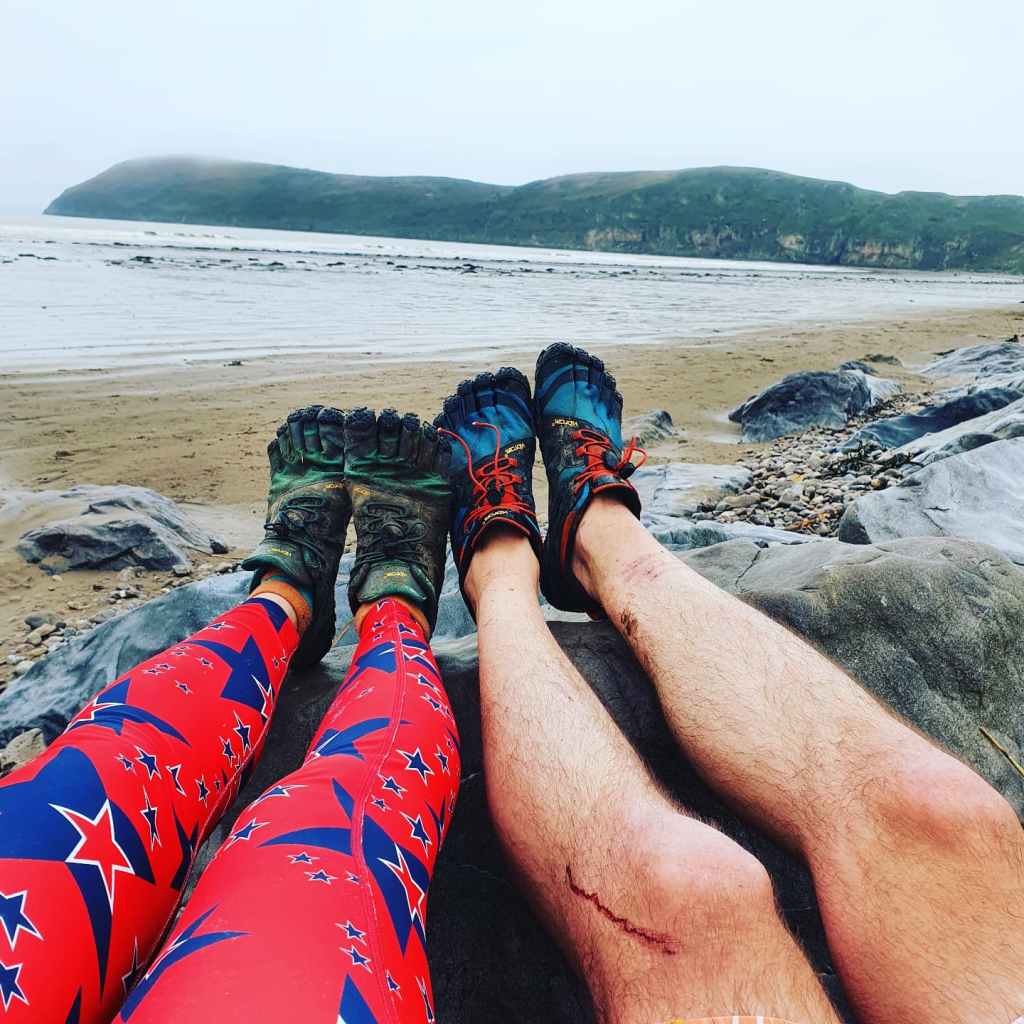
Plenty of you will know that I run in barefoot shoes – my go-to shoe is the Vibram V-Trail. I landed on this footwear after dabbling with a Merrell Vapor Glove, but before that I’d spent years forcing my toes into more conventional narrow trainers. Inevitably, the squishing of the toes caused foot pain and/or blisters, but it took me years to learn that I could make huge improvements in my foot health just my rethinking my running shoes.
A couple of years of running in barefoot shoes means it’s become “the norm” for me. But training for The Dragon’s Back Race has forced my hand (well, foot), into rethinking what to wear on the mountains.
Initially I sent out a message on social media asking for recommendations on footwear for the mountains, and let me tell you, the barefoot crowd were vocal! I’ve learnt over the years that my feet are only stronger from running barefoot. I appear to have fewer foot issues overall using barefoot shoes, and it’s given me a better understanding of my biomechanics.
Despite all the good things that barefoot running has to offer us, there are still in my opinion, times when we need something a bit more robust. Ourea, the organisers of DBR strongly recommend against barefoot shoes. I had started to feel guilty for considering other trainers, but nonetheless I capitulated and forked out on a pair of Altra Lone Peaks – a zero drop shoe with a wide toe box. It offered the grip that I was searching for – so I thought.
However good the Altra was on a gritty trail or a rocky climb, every time I hit wet grass, I hit the deck. After a 12 mile trail run involving five falls, I felt was back to square one.
So I did some more research and was recommended the La Sportiva Mutant – a shoe that is more focussed on mountains. It’s 10mm drop is a far cry from my zero drops, but I’ve given it a couple of tries now. The initial tightness around the mid-foot is giving a little. The grip is far superior to other trainers I’ve tried – but the real test will be to see how my feet fare over real long distances in them.

I’m really frugal about buying kit generally, and when I buy new trainers I feel like it’s at odds with my environmental/sustainable ethos. I’d much rather wear a pair to death/try to fix them/pass them on, so new shoes feel like a real luxury and I’m mindful that I have to look after them and get the most out of them.
I talk to loads of runners who are really brand loyal when it comes to their choice of running shoe. Admittedly, if you find a shoe that doesn’t give you any problems, then why would you change. But I’ve had to open up my mind to new shoe horizons.
The impact that discarded trainers is having on the planet is terrifying. And let’s face it, it all ends up in landfill so the choice to buy new shoes is one that needs careful consideration. This is something that doesn’t pass me by.
I’m not leaving behind my barefoot days. Far from it. All my non-mountain training will be done in barefoot shoes, while the new La Sportivas will be broken in on mountains and hills only. I wear barefoot shoes in day to day life, so my feet won’t forget how to be feet either!
What happens to the old shoes? Well, there are plenty of schemes where you can donate old trainers – Jog On is a scheme that’s partnered up with sportsshoes.com to keep millions of shoes out of landfill. Brands such as Vivobarefoot, Schuh and Nike offer recycling schemes, or you could take your shoes to a clothing bank to see them reused for good.

Don’t just throw them out when you’re done with them. Pass them on. I feel very fortunate that I have the opportunity to open a pair of shiny new trainers, but I’m remaining steadfast about getting every last mile out of the ones I already own.
What’s right for one runner doesn’t make it right for the next person. I can’t tell you what shoe is right for you. Barefoot running is also a bit like Marmite, but whatever your preference, for barefoot, or cushioned, zero drop, or latest release, we all do need to make more considered choices about the impact of our gear on the planet.

 Vegan Fitness Runner