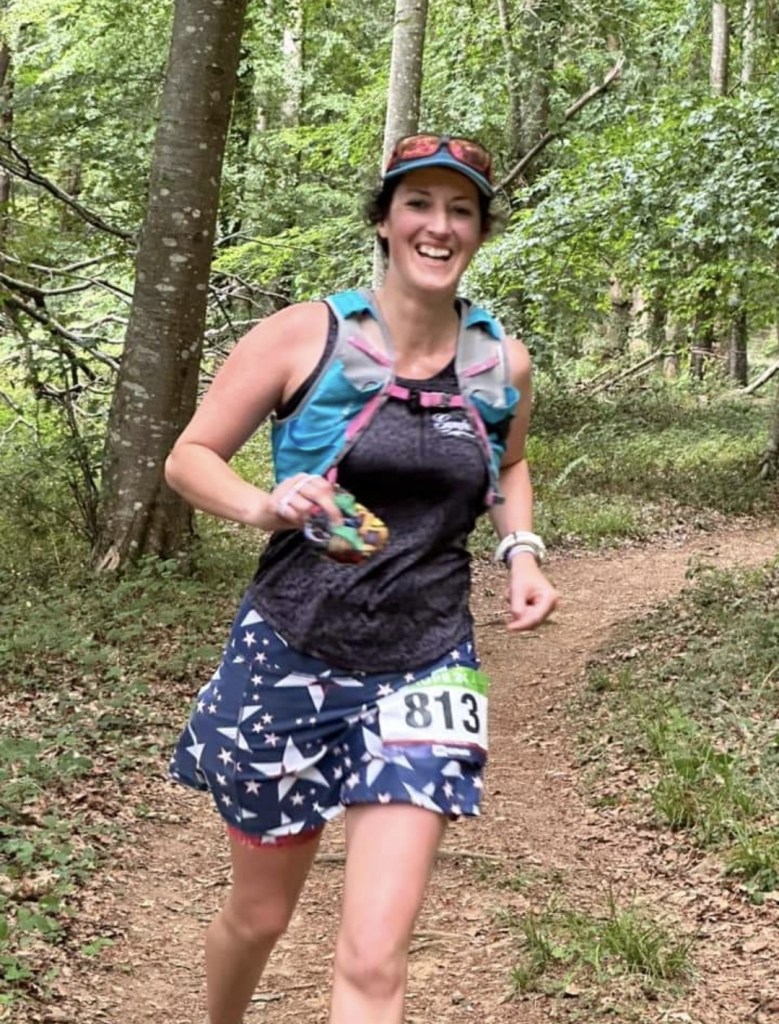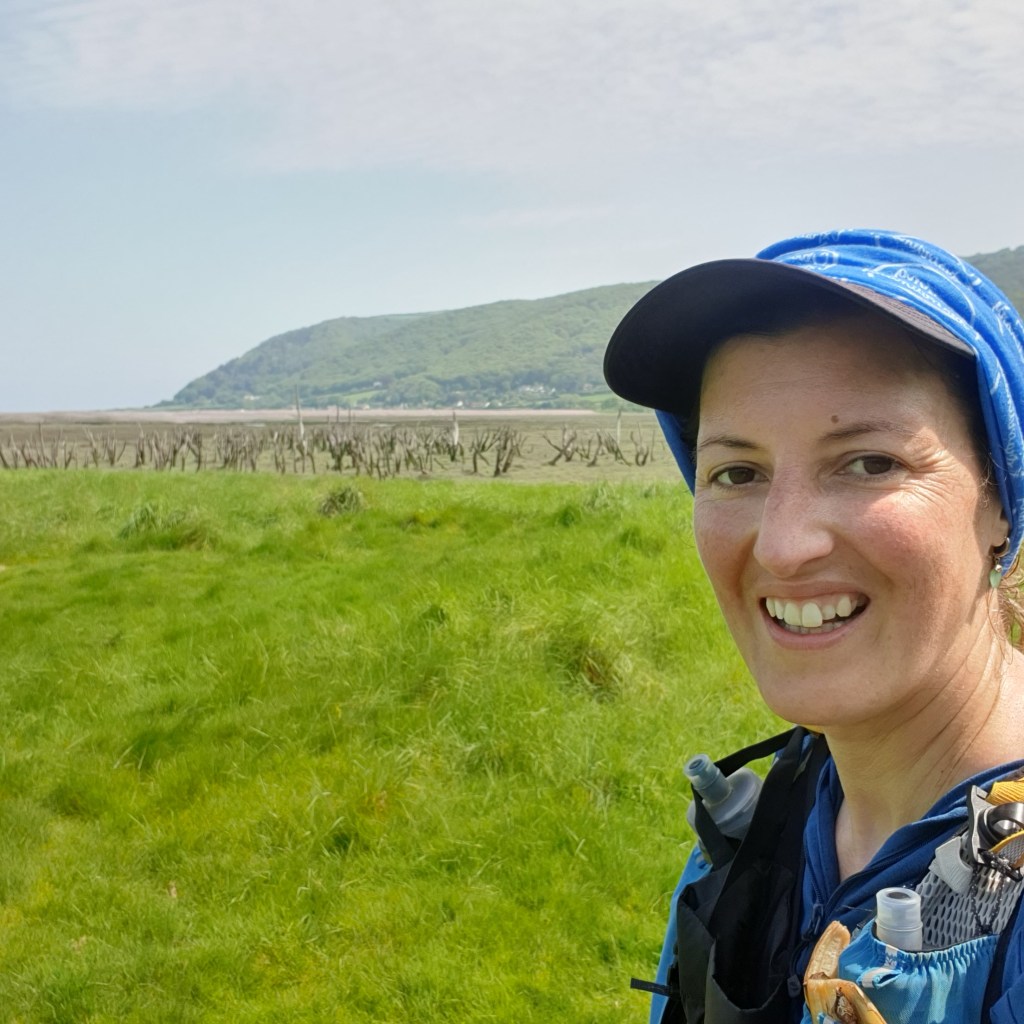
Solo and sustainable – one woman on the Two Moors Way

There are three things that stand out as I reflect on my solo run (read *shuffle*) across The Two Moors Way.

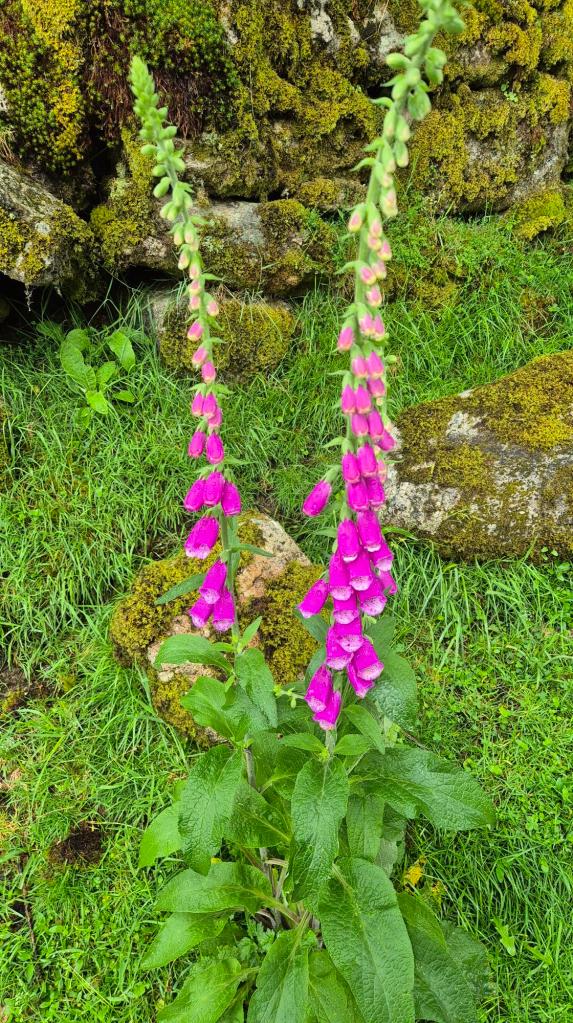
The hot pink foxgloves adding pops of colour against a verdant landscape, the 13kg of backpack digging into my left rotator cuff for more than 12 hours a day, and a constant worry that I wouldn’t make my goal destination before nightfall.

A whole life can be condensed swiftly into just a few repetitive thoughts when you have nothing but yourself to worry about, and with the big world worries behind you, you can really start to agonise about the minutiae.

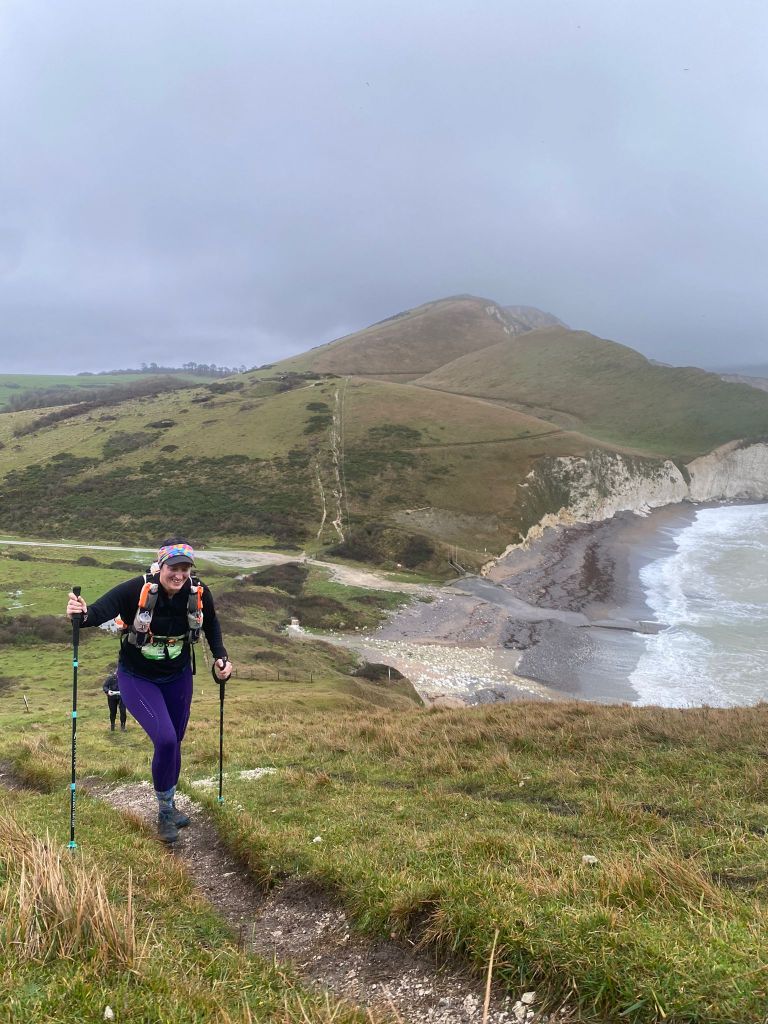
Leaving behind responsibilities – children, dogs, work, and swapping the mental for literal baggage, trying to complete 100-ish miles over Exmoor and Dartmoor, and carrying EVERYTHING I needed on my back, meant I could worry about stuff like whether I had enough water on me, how many gummy fruits I had left at any given time, and how I would deal with the frisky bullocks, all too keen to follow me for miles along the moors.

A solo adventure as a woman feels very different to one that a man might take on. I’ve not yet met a male runner nervous of running as night fell or who gave a second thought to running alone. When my husband says he’s off for a run, he gets a “have a good one”, when I go out, I get a “be careful”.
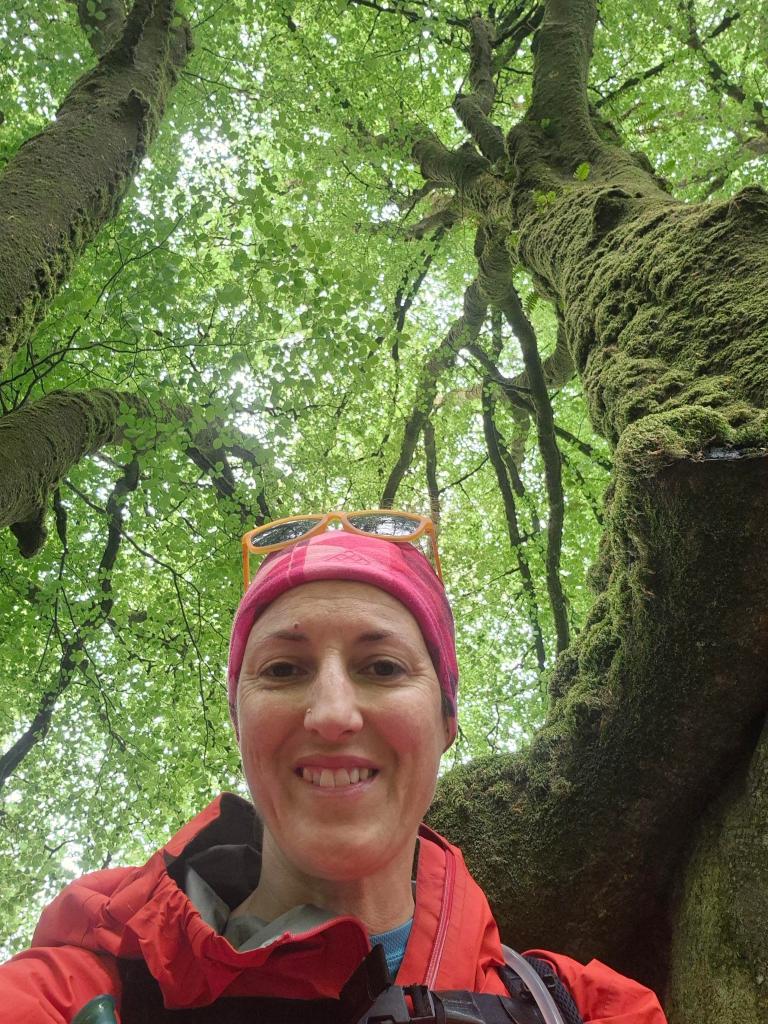
But this was never about proving that if a man could do it, I could.

I was tackling some of the most remote trails across South West England alone for other reasons.

Let’s take it back a step.

My calendar was blocked out from June 1 until June 9, for a run across Northern Spain with three fellow runners – we coined ourselves Eco Pilgrims. We’d run the Camino the most sustainable way we could. No fly – no new kit (within reason), it would show that runners can be responsible, reduce, reuse, leave no trace, all that jazz.

Only, two of the team picked up injuries and we had to postpone the trip (for those interested, it should be next March!)

With holiday booked, I decided that I would put my training to use, but I could also show my tiny audience of followers within the ultra-running community that you really don’t have to have a crew, stashes of expensive new kit, heaps of dosh, and regular pit stops, to experience life-affirming adventures.

In my bubble; I work for The Green Runners, I advocate sustainability and veganism through my own platforms and I have a podcast where I talk to elite runners and amazing endurance athletes.

I’m witnessing first hand the rise of adventure travel, more elaborate and challenging running events, and seemingly more out of reach records. It got me thinking. 

Was it starting to put people off just enjoying a run for running’s sake? Did everything now have to be an FKT, or higher mileage/altitude/distance than everyone else? Would there be anything left to aim for after that?

I suppose I wanted to bring it back down to basics; to run for the fun of it – to do it without burdening anyone else – to be responsible, and enjoy nature without impacting it detrimentally.

So off I headed, up to Lynmouth in Devon, with a cheap room booked for the night before the start of my journey which would see me run all the way to Ivybridge.

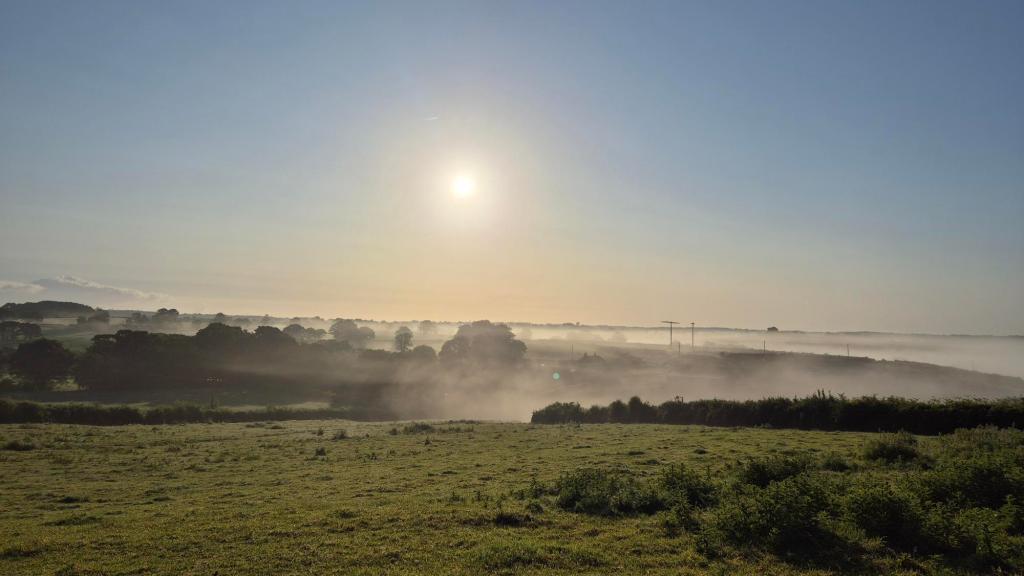
The morning began bright, and I set off from the sea wall at 6.30am following the double M signpost, that signified the Two Moors Way and that would become all-too familiar and comforting for the next 100 miles.

Two miles in and I realised I had been hugely overenthusiastic about “running”. The vertical slope leading up and away from Lynmouth had rivers of sweat dripping down my waterproof-clad back, and even walking with the deadweight on my shoulders was like wading through treacle.

My first sightings of the foxgloves came early on, and would pepper the entire route, hinting at a brightness when I started to feel overwhelmed. 

Skylarks hovered overhead as tree lined paths opened up to vast moorlands along the exposed Cheriton Ridge, and the Exmoor ponies would come into view on the horizon as the sun came out, before being shrouded in cloud again, and the coat would come off, before going back on again. Constantly. On. Off. On. Off. Infuriating.

I came down into Simonsbath quicker than I had expected, but from then on everything started to go in slow motion. This bag was too heavy. Like, way too heavy. I’d never run with this much weight before, and I gave into fast hiking. To Withypool, Hawkridge, and then climbing up, up, up, into more wind and a sudden overwhelming feeling that I had bitten off way more than I could chew. I rang my husband. He was out having a roast dinner in the local pub, talking was difficult. He said I sounded intermittent. I choked up, swallowed down the tears. Told him I’d ring later.

Two miles or so later and my spirits soared again as I realised I had around seven miles to reach Creacombe where I’d booked a pitch at a naturist retreat. Wild camping on Exmoor is illegal so I toed the line and booked ahead at the naturist spot – the only campsite on the trail in Exmoor. I used the pitch to literally cook my dinner – thanks to Huel ration packs and some hexi blocks, and to sleep, and I was packed up and gone again by 6.20am the following morning without witnessing an inch of nudity. I’d covered 34 miles.

The first night taught me that my tent (without an inner – figured that was just extra weight) was completely sodden and no match should it rain.

The repacking was a little clumsy, but that would get better the following night. 

Day two, and I made it to the town of Witheridge pretty swiftly. Only today the weather was different. It was hot. Really hot. Any runner will tell you it’s harder in hot weather, and just when you think things are going well, inevitably they’ll then go really badly. There’s a new housing development being built in Witheridge. It means the trail is blocked, and I spent an inordinate amount of time walking up cul-de-sacs, re-tracing my steps, getting irate trying to find a way out of an urbanised area. Once I popped back onto the trail I started to consider where I could top up my water. I was aiming for pitching up at Drewsteignton, so I’d get around 30 miles in that day, but it was so hot and I was drinking fast. 

A slog later I came across a couple clearing wood from their property and I asked whether they knew of any fresh water sources between them and my end spot. They offered me water from their tap. The kindness of strangers never fails to amaze me. The lady told me her mother had walked the South West Coastal Path alone with her dog. How she wished she could do something similar. How amazed she was with what I was doing and how she maybe would try walking more of the path one day.

At Drewsteignton I learned there was nowhere to pitch my tent. I had to plough on; to the deep sided ravines of Castle Drogo, the most breathtaking vistas. Onto National Trust property and the sudden realisation that camping illegally might now suddenly be my only option. I was on Dartmoor National Park, where wild camping is now legal, thanks to a ban being lifted in the last few weeks, but NT property is a different matter. I had no choice. Please don’t arrest me now.
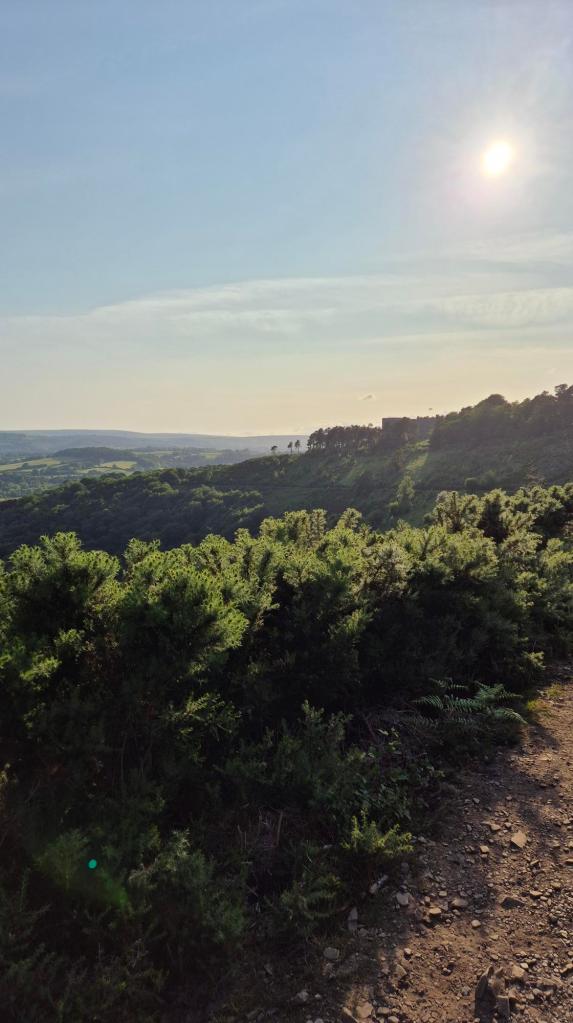
I nestled into the hill snugly among the ferns, in a sheltered spot, where the sound of the wind was more fearsome than its actual impact on my tent.

At around 2.30am, however, a sizeable gust whipped the guide rope from out of the peg and half the tent collapsed on top of me. It wasn’t raining yet. Thank god. A swift nighttime modification had me back inside and into my bag and bivvy where I could cover my head and keep warm for another hour.

And then I was up. Packed up before the rains came. Walking out of Castle Drogo by 4.30am. I’d nailed it.

Until something almost catastrophic happened.

Funny that when you start to feel too smug, the universe has a way of bringing you back down to earth.

I’d reached Chagford, I could crack the back of most of Southern Dartmoor today, I was moving well, things were looking great. Until I slipped. 

With sideways rain, I fell, lurched sideways, dragged by the enormous pack (have I mentioned how heavy that was?), and falling, my head struck a rock.

Bloodied knee, throbbing hand, blurred vision. I sat there for what seemed like minutes going over the potential outcome of this fall. I could be concussed. I was close to blacking out. But it was, after all 4.30am, and I was in the back end of beyond. I touched my face and felt the swelling on my cheekbone. But not blood. A moment later, I was compus mentus. The dizziness went. I counted to ten. I talked to myself to check I wasn’t concussed. “Come on girl, up you get.”

With the rain washing my bloodied knees I was pissed off, but I wasn’t down.

For the next six hours, up onto the exposed, bleak hills, I shuffled, ran, did everything I could to keep warm, moving continuously through knicker-soaking rain, knowing that absolutely everything I carried was now sodden through. I couldn’t bear the thought of another night camping, but I also knew I wouldn’t make it to Ivybridge that night.

Then, coming off the hills, the sun came out. And again my spirits lifted. I took some time to treat myself to lunch next to the most gorgeous river at Poundsgate – a village that had a feel of Tarr Steps, only ten times better.

I prepped my meagre rations on my little stove set up on a rock, while a couple of dogs came over to see what was cooking.

With a warm meal in my belly, I had renewed vigour, and despite a new adaptive way of moving – leaning slightly to the left to alleviate a non-compliant hamstring and an absolutely shot left shoulder, I shuffled up and up and up, over bog and tussocks, and onto the Southern part of the Dartmoor hills. A steep climb from Scorriton and some boggy walking and I started to wonder where I’d camp that night. 

Then, I hit a farm track. I checked my map again. This couldn’t be the track that led the whole way back to Ivybridge, could it?

I’d miscalculated. Ivybridge was closer than I thought. This track was the easiest terrain I’d hit for the whole journey. I picked up my pace, running again.

And then then farmer atop a quad bike rode towards me, with his entire herd behind him.

A tiresome wait for wayward cattle to follow the farmer who was trying to go cross country to avoid me – with minimal success.

Eventually, as I started to shiver, I was back on my way. And the sun shone overhead and my ego was boosted as I suddenly realised, bloody hell. I’m going to make this in three days.

Sometimes when things seem bleak, there’s a blaze of hot pink just around the next corner.
  • Three days – Lynmouth to Ivybridge
  • 102 miles (ish)
  • No new kit
  • Leave no trace
  • Unsupported
  • Me, myself, and I
Aligning running with values

Firstly, sorry it’s been a while. I wrote back in November for World Vegan Day, and then I got busy – but in a good kind of way.

Beginning of EnduranceLife Dorset Marathon

Work for many is a means to an end, a money-making exercise, and of course that’s true for me too – but I’ve been lucky enough recently to land work with people who make me want to skip to work in the morning. That’s because it’s the kind of work that allows me to talk about running, and veganism, and environmental issues – and I just LOVE doing that!

When I document my running life it’s because I want to share with others than being a middle-aged mother who happens to be vegan and keen on planet-saving, doesn’t have to spell the end of adventure; of achieving great things; and of inspiring others.

For every person who tells me they are motivated to go out and run, or try a vegan diet, because they read that I’d done something – then it only spurs me on.

Getting the chance to work with Running On Plants late last year further exacerbated that desire to share with others what great things we can do together, without harming our planet and exploiting animals. And through them I’ve met some absolutely awe-inspiring individuals – including the likes of Paul Youd – 85 years old and smashing out 1,000 press ups everyday (yep, he’s a vegan!); and I’ve been motivated to set goals in place that align with my values and keep me moving.

Dr Iron Junkie Minil Patel, Kate Dunbar, me and Tom Pickering of Running On Plants

The Vegan Fitness Runner podcast has been GREAT. I love doing that (no, I don’t get any money for it!) but it showcases strong and determined runners, activists, and trailblazers. Yes, more of that incoming.

In December I ran my slowest ever marathon, but it was one that had tormented me for years. The EnduranceLife Dorset Marathon was a cold, slippery, windy affair, along the South West Coastal Path. In previous years I’d managed the half marathon, but I’d bailed on the marathon before.

Flanked by my fellow Dragon’s Back comrade Ben it took me a staggering nine and a bit hours to finish – but I goddamn finished the thing! That, my friends, is tenacity!

Hoiking myself up a hill in the EnduranceLife Dorset Marathon

I’m working closely now with The Green Runners who align their running on core pillars of how we move, how we eat, and how we speak out. And with this platform I can speak out to some extent. To whoever might listen!

Yes, there are plans for this year – there’s a focus on me to speed up. And I’ve got a 45-miler Dragon reunion run firmly in the diary for August, and amongst all the training, and the aerial hoop, and the weights and strength workouts, they’ll be the continued message that I’m driving home; you can be happier and healthier and strong and awesome without having to plunder the planet and eat animals. So there.

And absolutely, I get enough protein and I’m not emaciated!!

A Hatchling is born

Trying to encapsulate last week’s experience on the Dragon’s Back Race is like trying to bottle lighting, but then I like trying hard things so I’ll give it a go!

Ascending Llanidloes. Photo by No Limits Photography

I’ve been waking up at strange hours – around 4am – which would have been when my alarm went off on camp; ready to grease my feet, check for blisters, deflate my sleeping mat and repack my camp bag, have my breakfast of hash browns, beans and vegan sausages, grab a banana, get my kit checked and make my way to the day’s start line.

Of course I don’t have to do that now, yet it feels like I’m grieving its absence. Not just the strange routine, but the people too.

The day before we got the bus up to Conwy and the start of the race, the weather had been pretty standard for the UK – end of summer, schools due to go back. It was turning autumnal, nights drawing in and the prospect of a perfect, temperate climate upon the mountain tops of Wales.

But much like what happened to me in 2022 for my Macmillan Way run, on the Monday a heatwave struck.

This impacted me, the other runners, and the event organisers, in ways that we hadn’t anticipated.

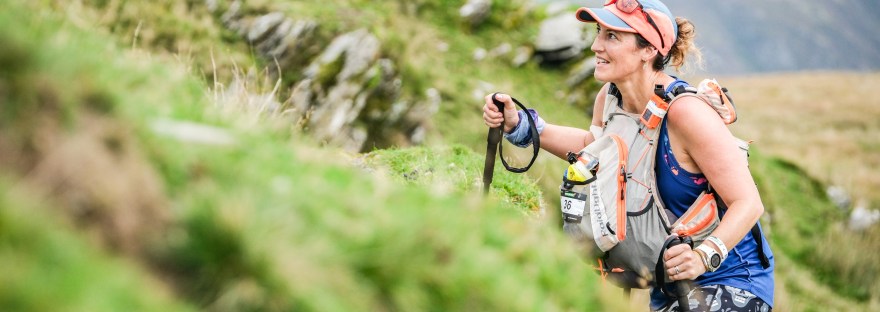
It meant that on day one, despite running well out of Conwy Castle and up to Tal Y Fan, as the sun came up and started beating down relentlessly by the time I reached Pen yr Ole Wen I was moving much slower. I could see the half way check point below me at Ogwen Support Point, but the time was slipping away.

I had options. I could bust a gut and still reach the cut off if I really ran like the wind. But if I did that I’d still have to face the climb of Tryfan and the Snowdon Horseshoe, most likely not make the next cut off, and inevitably ruin myself and scupper my chances of hanging in for the full six days. The other option was to take on the half route, which this year for the first time has been renamed “The Hatchling Course”.

To put it in context, the full Montane Dragon’s Back Race covers 380km (236 miles), and 17,400 metres of height gain (57,087ft). As a Hatchling, you can choose to either run the first or second half of the day – so still getting in some serious mileage and vert by the time you finish in Cardiff.

For many runners, day one saw them off. The heat was brutal and stripped them of all reserves. To drop down to the Hatchling was, for some, never an option. They were here to become fully fledged dragons. That was their only goal.

But plenty, like me, took stock and reassessed. We still had another five days to get to Cardiff, maybe even in a more enjoyable way now that we were running half the distance.

In fact what happened next was unprecedented – where in previous years those who’d attempted the dragon and failed early on would go straight home, this year saw 134 Hatchlings complete the event, and 87 complete the full Dragon’s Back.

Although 45% of the 298 didn’t make it to Cardiff this year, thanks to the option of the Hatchling, 195 of the 298 starters did make it.

As I sat at the day one halfway checkpoint at Ogwen, I recruited my first fellow Hatchling Alison. She was ready to quit. She told me she wanted to just sit on the mountain and not move until someone had come and got her. I asked her if she’d keep me company for the rest of the week, no pressure, and we’d try and make it to Cardiff together.

That promise proved to be the best move I’d make.

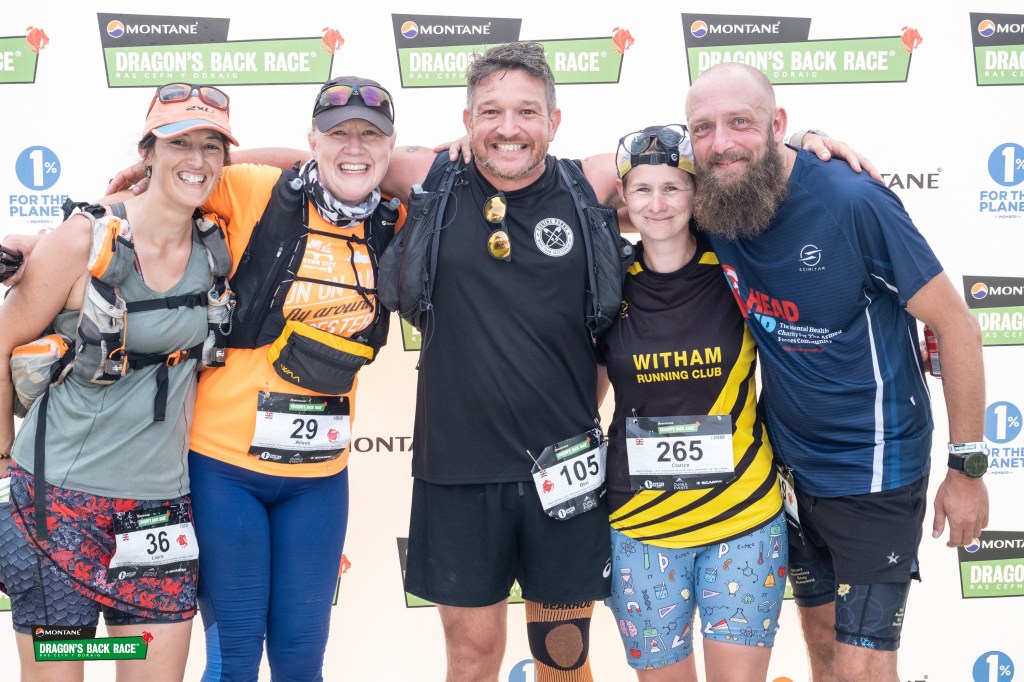
Later that day I learnt that two of my other friends (people become friends very quickly in situations like this) had also come back to the halfway checkpoint having been beaten by the steep climb on Tryfan. Clarice and Ben became the next two in our team of five.

Graham came next, on day two. He’d timed out on day one, but was going hell for leather again and we met him on a steep ascent early on in the day. He didn’t look his usual self and the five of us sat and took a moment together on Cnicht.

Revived, we continued on together as, what one described as “a strange version of the Fellowship of the Ring”, the photographer even capturing what would then go on to be our “poster shot”.

Throughout the next few days we’d continue to wake ridiculously early, check in and meet as a group ready for the start line, and if not run together, know that we’d be looking out for each other. There were times when we cried with laughter – bum sliding down hills, or making jokes that are only funny when you’re totally sleep deprived and exhausted. There were times when we gritted our teeth, finding something, somewhere that would pull us through the tough bits. Alison had a knee injury, so did Ben – which later transpired to be a torn meniscus; my shoulder kept cramping from the weight of the pack and constant use of poles, and Graham and Clarice, like all of us were just downright knackered.

At the end of our running shift we’d have to make sure our camp admin was bang on. Eat, wash in a cold river, get kit ready for the following day, charge devices, check our Dragon Mail from keen supporters, sleep. I had a wonderful bunch of tent mates too – I was in a tent of international super talents. The runners I shared with were absolutely phenomenal; the likes of Sanna Duthie, Silvia Trigueros Garrote, Caru Coetzee, Margarida Bagão, and Catharina Rennie. Feeling comfortable in your tent makes for a smoother experience, I can tell you.

We battled through the searingly hot days, carrying more water than we’d anticipated to (training runs were not geared to hot weather), and we continued, one foot in front of the other over mountain ranges including Cadair Idris and Bannau Brycheiniog (The Brecon Beacons), where shade evaded us and our only relief from the heat was to dip our clothing in the rivers.

A special mention has to go to the crew on this epic race. From the water stops and half way checkpoints to the catering staff, friendly faces at the finish line, those who put up the tents and ferried runners from place to place, and everyone in between. This race is a logistical puzzle and race director Shane Ohly (he’s over on my podcast!) worked through insane conditions to make everything come together. A display of epic teamwork both behind the scenes and in the foreground.

Crossing the finish line at Cardiff Castle (all five of us made it) was a surreal and emotional experience. To become a Hatchling had become something more than I’d anticipated. No longer did I see myself as a failed dragon; instead I’d worked through a whole host of emotions and doubts to come through to the end as something better.

The Dragon’s Back Race is not just a run. For me, certainly it was a life experience that I’ll never forget, and from which I now have friends who, sadly for them, may never see the back of me.

  • I can’t write this blog post without special mention AGAIN to RAW Adventures and their recces throughout the year, without whom, I can hand on heart say I would not have managed to complete the race to Cardiff. Their support has been invaluable and I would recommend anyone with an interest in mountains, running and adventure to get in touch with them
  • Next I have to tell you that entries are now open for Ourea Events Dragon’s Back race 2024. Whether you choose to take on the full dragon or the Hatchling I can tell you with certainty that you will not regret it.

Pre-race panic sets in

It’s normal to be nervous before any race, but the sleeplessness and constant churning in my stomach these past few days is a direct correlation to the looming Dragon’s Back Race, for which I now have my official number.

Recce in the hills

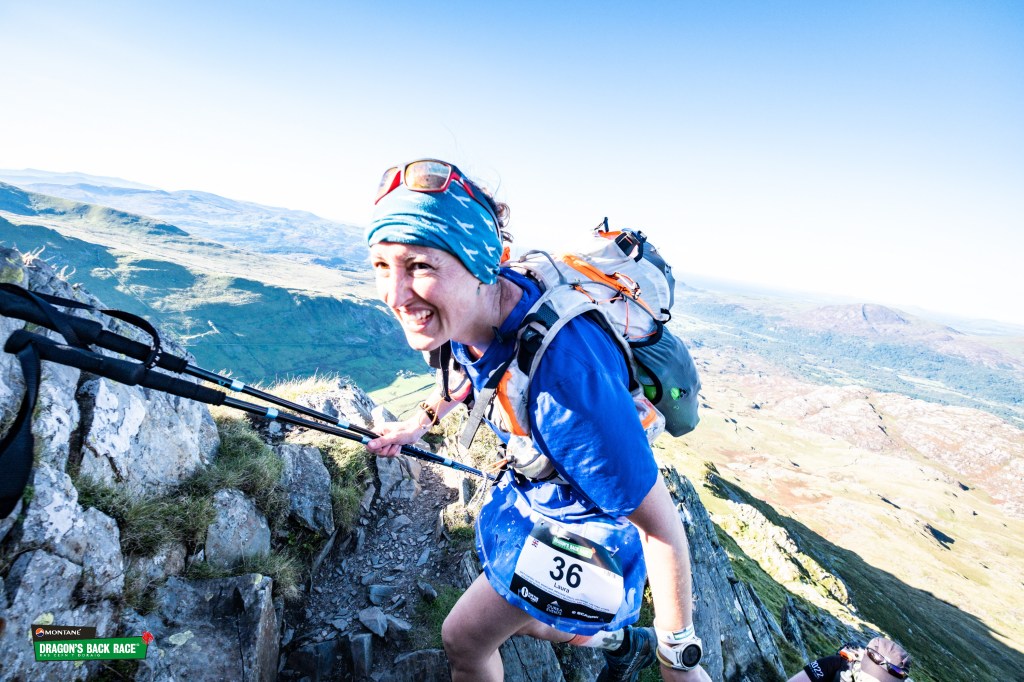
It’s a good number. 36. It sounds rounded and wholesome, and I’m happy about that.

I’m also happy about how I feel generally. I’ve made it this far – I’m fit and healthy and I’ve almost nailed the packing.

But however much training and preparing you do, physically and mentally, the pre-race nerves can be a shocker.

Everything I know, I suddenly think I don’t know. My mind is telling me that during this tapering period I may actually forget how to run entirely.

I’ve looked down the list of entrants. There are strong runners in the field. There are people travelling from across the world, there are those who’ve competed in this race before. And there’s me.

I can’t control the nerves, so I’m focusing on what I can control.

There’s method here somewhere

I’m being methodical about packing, revisiting the GPX files and the digital map to feel more confident about following it over the week. Organising my camp bag for minimal time wastage, and most importantly ensuring that I have suitable food for the week (yes, that includes peanut butter and jam).

What is both wonderful and terrifying is that I have people rooting for me. If nobody knew, I could sneak up to the mountains without any pressure, but they do, and they are.

One thing I’ll promise you. I will leave absolute everything out there on those Welsh hills. I will give it my all. I will bust my metaphorical gut. I will do this for everyone that has put their faith in me.

I can’t promise anything beyond that.

So, number 36. Let’s make it a good one. And thank you for everyone for believing that I should even be on the start line. It’s humbling and overwhelming all at once.

So until then, friends, this is it. September 4th. Let’s go get that dragon.

A 24-hour relay and an unexpected win!

I’d factored the Hope 24 Trail Running Festival into my training. It offered hills, time on feet, and sleeplessness. All things that I’ll need to be able to deal with on the Dragon’s Back Race.

It all seems so easy in the first few laps!

Off I headed to Newnham Park near Plymouth to meet up with my team and to join the camp which included a bunch of friendly faces from the club I used to run with, The Langport Runners.

We were vague on strategy. The concept was a five mile loop, a baton, and only one member of the team allowed on the course at any time, over 24-hours.

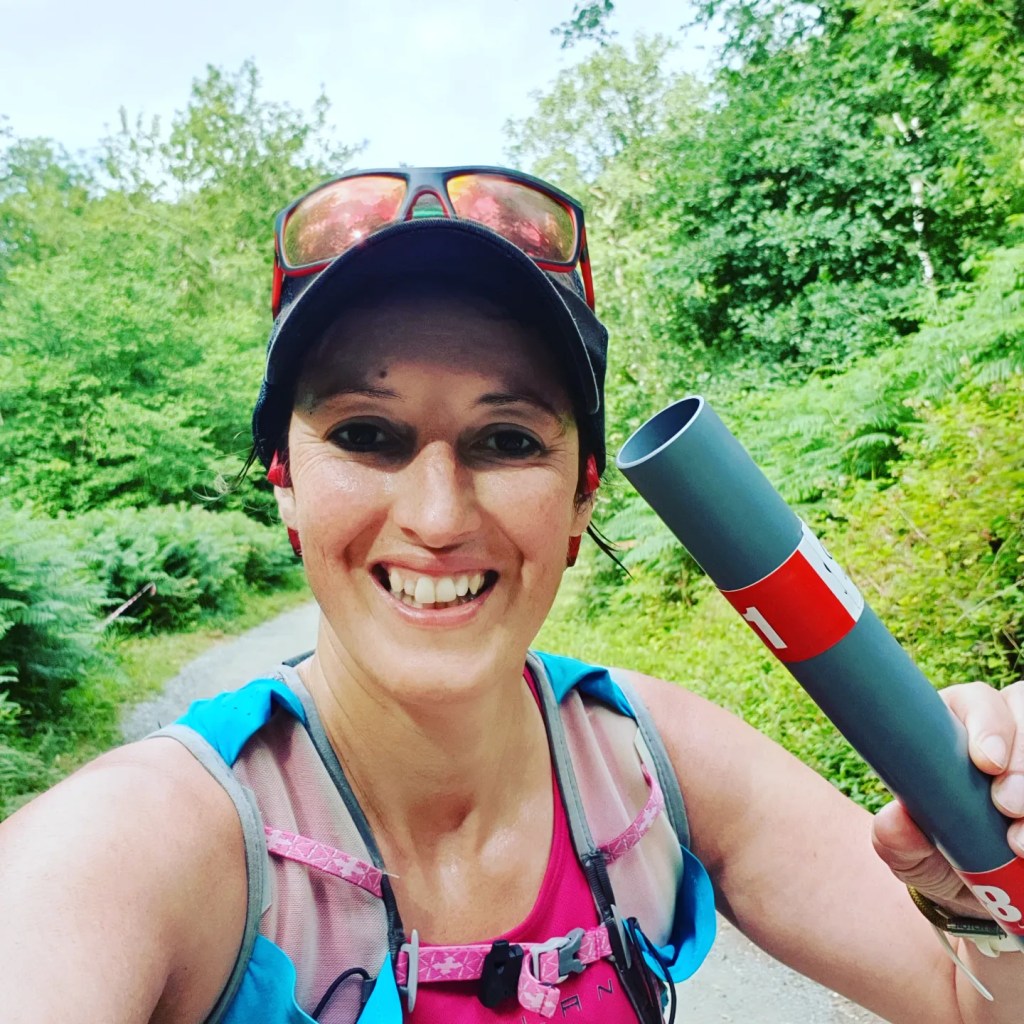
The baton firmly in my clutches

We made it up on the hoof. We would all run one lap, two or three times, then do a double when it got dark to give the others a chance for some sleep, and then finish off with whatever we had left.

What worked so beautifully is that as a team of four ladies, all over the age of 40, we were evenly matched and we can all run sub one-hour loops. We just kept going.

The course was beautiful. I’d say undulating, but probably most would say hilly. After the sixth lap there were parts that I was less than pleased to see again.

As I took on my first five miles of the double, at half past midnight, it became clear at mile four that I’d “misplaced” the baton. You know, the crucial thing with the timing chip in it, that would be the make or break of us getting a time at all. It had jumped out of my pack at some stage of the loop, and was nowhere to be seen.

My stomach dropped. What the hell would I tell my teammates, who were currently snoozing away, none the wiser? After deliberating and slowing considerably, I made the call to carry on and hope that the Race Director would understand my plight.

The look of someone who has lost the baton, somewhere, in the middle of the night

Luckily, he was sympathetic and took a note of the time, photographed my number, and asked me to find the baton on my next loop round!

And just like that, it appeared in the first mile, like a beacon!

Crisis over and approximately one-a-half hours of sleep later, I completed a total of seven laps – 35 miles, and my teammates ran a similar race. We managed to have someone running at all times throughout the day and night, so 24 loops later we were all tired but happy, and went off to collect our giant-face-sized medals and can of Erdinger.

Imagine then our surprise, when on top of all this we were hailed as the first all-women team! We’d come with no expectations and finished on a real high.

Winner winner , vegan dinner!!

Well done to the Vegan Runners as they were strong in numbers and performance on this event, also to the lovely Vicki Trundle, who I’d met at the Hilly 50 and recommended Active Root to. She racked up 30 incredible loops, 150 miles, over 36 hours, which quite frankly blows my mind!

Find out more about Hope24 by clicking here

What does 50 miles feels like?

When you push your body and mind to its limits, it can feel euphoric when you cross the finish line. You can also just feel exhausted!

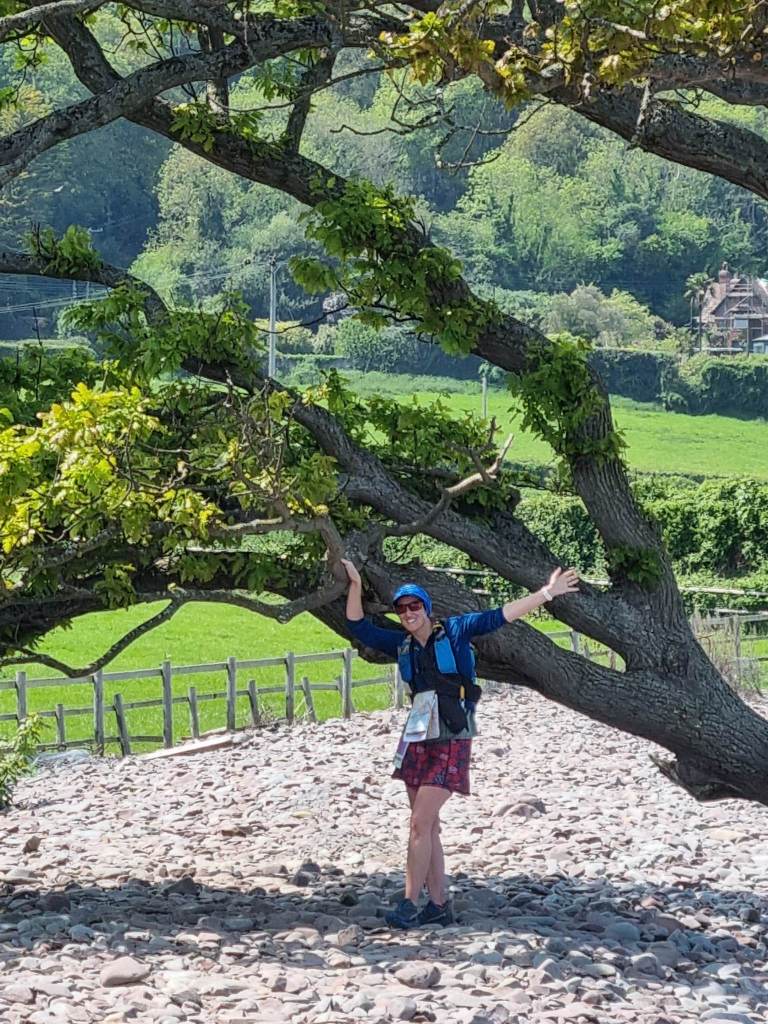
A really nice tree that we ran past

I’m always humbled when it’s Marathon time of year – you know, all those inspiring people who’ve won a place at the start of London Marathon to raise money for charity and spread awareness for good causes, those who earned themself a holy grail ticket to run Boston Marathon because they’re just phenomenal runners, and all the others in between. With the rise of the ultra, it’s easy to forget just how far and tough a “normal” marathon really is.

A very beautiful and pebbly beach

I first ran one in 2009. It was then the Flora London Marathon. I was in my early 20s, before I was married with kids. I’d done the absolute minimal training, I certainly wasn’t a regular runner, and I hate road running. No surprise really that it took me 5 hours 35 minutes, and I felt very underwhelmed at the finish line.
That was well before I got any kind of real love for running. My trail adventure running came much, much later. As for road marathons – that was it for me. I’ve not done one since.

Now though, I understand the need for training. That you can’t just throw a pair of shoes on and hope to get a good time, or even to feel good at the finish. While a marathon is tough, really tough. How exactly does someone then go and run 50 miles?

I’ll try and explain. I’m a back of packer, but I know that all I need to do is throw one foot in front of the other. I can be quicker, that comes with very specific training, but at the point in my training for the Dragon’s Back right now, I know I just need to up the miles and the elevation. Really, the elevation is the killer here.

Training has been consistent but not quite where I’ve wanted it to be, given time constraints of family life and juggling work, dogs (not literally juggling them – they’re far too heavy), and children. I was ill in April too which threw me totally and messed up my plans for any quality running.

Talking to Dragon’s Back Race Director Shane Ohly over on the podcast – he had already told me, you mustn’t go into this event underprepared!

So when the Albion Hilly 50-mile ultra marathon popped its head up, I figured, I need to do this.

I know what you’re thinking. Not much training again. Why would you do that?

Here’s why. Because I’m going to have to do something tougher come September and putting myself outside of the comfort zone was necessary. For my confidence; to get the miles in my legs; and to just get some serious elevation – away from the flats I’m used to. This route would take us from Minehead up all the hilliest hills Somerset could throw at us – Bossington Hill, over to Porlock Weir, Webber’s Post, to Dunkery Beacon and back again.

This was a bit of a make or break moment. Could I actually cover the distance over 8,300ft?

I hooked up with a fellow runner, who was trepidatious about it too. We made a vow that we’d get each other round. Having that kind of pact makes it harder to quit.

For the first three miles we went off too fast. Ten minute miling maybe. That’s because there were runners up ahead who would break the course record – it’s easy to get swept along in that kind of frenzy. My runner partner and I however, are not those people! I pulled right back. I know my body and it takes me about five miles before I’ve got into any kind of stride. The uphills were walked, the downs and the flats run. We took photos in the sunshine. For 25 or 30 miles it was glorious.
Eating frequently and taking on fluids is vital. The weather was hot, and you can easily forget to fuel if you don’t feel like it. It’s a matter of forcing it down. With such wonderful checkpoint volunteers, they advised that one stretch would be an 11-mile uphill slog before the next aid station, and that we should eat as many Marmite sandwiches and pickles as we could before attempting it. I took their advice. I frequently ate.

Although this was a partly way marked course, you had to have your wits about you and navigation was key. We took a couple of wrong turns. Trying to ascend to the summit of Dunkery Beacon (highest point in Somerset), while having chosen the incorrect path, saw my mood dip and I snapped at my compadre – I was getting tired and we were going the wrong way.

Still feeling pretty fresh here!

After we righted ourselves and hit the top of the Beacon in dazzling sunlight, we sailed through the next few miles. The sun dipped and our next challenge was getting through the woods before nightfall. We made it, but with darkness comes new challenges.

It was hard to see underfoot. Bumps look flat, and hills look hillier, sheer drops you can’t see at all! I fell once, but luckily it was a soft landing. A good head torch gives you confidence in the dark.

I’d anticipated some niggles in my legs, and especially my feet, because I was trying out the shoes I’ll wear on the Dragon’s Back Race. The niggles never came. This told me that although I didn’t feel I had trained enough, what I was doing was paying off. If anything, it was my back and shoulders that were starting to stiffen. Wearing a pack and leaning into hills will do that.

The final eight miles were both a mental uplift and a total physical slog. By this point I felt nauseous at every sip of drink – Active Root sports drink – or every nibble of food. The pace was slow. My partner’s knee was starting to hurt. Nevertheless, by this stage, you know you’ve done it.

We powered on. We fast hiked the final mile, and finished feeling – erm, quite good actually. Euphoric? Maybe not. Knackered? Most certainly – it was 2.30am, after all!

Huge thanks to Albion Running for such a gorgeous event. The volunteers were fabulous and the food selection was dreamy for a vegan!

Albion also offers a Flat 50, and the 100 (if you fancy doing both hilly and flat!), as well as other fab races, which you can find on their website.

Failing as part of the process

Learning when to stop has been an important lesson for me as I strive to slay the Dragon

You know the person that always says hi, is permanently perky, doesn’t shut up giving positive affirmations and constantly tries to cheer other people up? Well that’s me. Mostly.

Being an eternal optimist has always stood me in good stead. I don’t stress about much, I “grab life by the balls”, and all that stuff. But recently, a swathe of pessimism and bad luck started to chip away at that perky exterior.

Training has certainly suffered as a result of a lack of time, but more worryingly, due to a lack of enthusiasm. It’s been totally out of character. The cherry on top of the Cake of Gloom was a proper belter of a head cold/virus, that struck before the weekend recce that would see me attempt 17 miles from Conwy Castle (start of the Dragon’s Back Race), to the Ogwen Valley support point.

As a merry band of Dragons gathered at the meeting point, I knew that although I wasn’t feeling my best – a lack of sleep, a total shocker of a journey up the night before, and a trepidation that I think everyone experiences before these events, I would nonetheless give it my best.

Early on, as the other Dragons skipped their way up the hills – I knew I was far from skipping – more trudging. Reluctantly, begrudgingly. My legs didn’t want to cooperate and my head – well it felt like it might just explode.

I didn’t want to talk. When the lovely team members asked questions and started chattering, I was one-line answers at best. What the hell was going on? One guy even ran back to check in on me. “I’ve been there”, he said. “It chips away at you mentally.” Boy, was he right. Being back of the pack when you’re working at capacity can feel like a grenade to the brain.

RAW Adventures Event leader Kate knew something was up. She’d seen me running in February and knew that things were amiss. Where was the perky Laura she’d met two months ago? She asked gently, maybe we should think about splitting the group?

I didn’t need much convincing. The pace I was running meant at least another seven hours on the mountain. I didn’t want to hold the others back, and I certainly didn’t want to feel like this for another seven hours.

Save your legs, Kate said, Make the next day count.

We turned back at seven miles – after summitting Tal y Fan, and took a gentler slope back down into Conwy. I’d managed 12 slow miles.

I’d cried. I doubted if this was even achievable. This race is not for the feint hearted. Here I was failing on a recce – what the hell chance did I have on race week?

But here’s the thing. We don’t win all the time. In fact every step of the journey is beset by stumbling blocks – mentally and physically. Sure, I could have run the 17 miles but in doing so, what would the rest of that week’s training look like?

At least my legs were fresh enough to summit Pen Yr Ole Wen the following day – just shy of 1,000 metres. By myself, in the mist.

This is a lesson. A powerful one. That no, sometimes Laura you can’t just steamroller through something and hope you’ll wing it with a smile. That a cold, a virus, a blow to your immune system, really will take it out of you, and you can’t just brush that off.

That it’s OKAY to take a few days to eat, drink, rest, recuperate, and come back to a stronger mindset and feel like you can see a way through.

I couldn’t write this blog post for a while. What was the point, I thought? It’s not even like I can run well at the moment. Who even wants to read this? But I think it’s important that I document the low parts, because everyone deserves to know that failure is crucial. It’s the getting back up that makes us stronger…… and see, even the positive mantras are starting to come back to me again!

By the way. Kate, you’re amazing. I think everyone needs a Kate in their lives.

Solo mumming and a pinch of demotivation

Some weeks it just doesn’t go to plan, even with the best will in the world.

Many of you will be able to relate to the struggle of balancing busy lives with some form of training programme (in my case, training is very fluid!)

These past few weeks I’ve been on child taxi duty for most of it, while my husband works away. The cold nights have left me completely disinterested in even heading out to the shed for a dreadmill session, and it’s a mix of the post-January-February-hangover, and simply just not having the time to get out for a meaningful session.

The run4emily turnout was strong

Day to day I’m trying to fit in my work hours, get the children where they need to be, and keep them and the dogs alive and happy.

It’s made me feel RUBBISH. As much as I say it doesn’t matter if I miss a couple of days, missing a week of any decent training runs has an impact on me and my internal monologue.

Whereby I’m usually very much of the “you can do it” mindset, I’ve been starting to tell myself “you’re losing it”.

Who am I comparing myself to? The other Dragon’s in Training on Strava, super quick 5km runners, mostly men. You can see why I’ve been getting inside my own head.

Yesterday I literally had to drag each leg out of bed to run a route I usually relish. Three miles in and I was hating every step. I changed tactic for the second half, I put some music on – something I rarely do as I like to be present in the moment. God did it help! I was bouncing up the hills, motivation was slowly creeping back. Then, home for a shower, a quick turn around to drive to Warminster and Run4Emily

We get there in the end!

A great turn out, but my heavy legs only had chance for one three mile loop before I had to get home.

Yesterday was a slow run day, but necessary day for getting my head back to where it needs to be. It’ll be more short sessions – intervals, treadmills, hill reps mixed in now. The long runs are great, but my goodness they take time and we are all short on that!

This Dragon in Training is still very much in the game!

When training becomes part of life

It’s not just a hobby anymore – training has to be a lifestyle choice

Looking out over the Elan Valley, part of the Montane Dragon's Back Race
Remind yourself why you’re doing the training

As the dial on the treadmill sped up to 8 miles an hour and the sweat dripped from my brow, I wondered what exactly it was that drove me to get on the damn thing at 9.30pm in the first place.

Parents and anyone who works, and certainly parents who work, will know that fitting in any kind of exercise class, running session, bike ride, or light stretch, need to choose times that can be utterly inconvenient.

Where a 5K Saturday Parkrun generally fits in with most family’s “free” time – training for a 237-mile multi-day event becomes more of a challenge.

So how can it be done?

For me, changing my mindset of doing exercise as a hobby was key. Exercise couldn’t be just that anymore, it had to be part of my lifestyle. I’d never choose a hobby that involved a 5.30am alarm, or intervals on a treadmill (when is this ever fun?)

Training now is something I need to make happen to ensure events I want to take part in are infinitely more do-able and therefore enjoyable.

I have an idea each week of what I need to achieve. That might be hitting a certain number of miles run, or metres of elevation, or hours of strength training; and then I must plot it in around life. 

I’m supremely lucky in that I can go out for my weekend long run and have a support network that allows that. But when it’s me at the helm, or work commitments have to be met, then the dreaded treadmill, aka DREADMILL, at 9.30pm has to be the way the training gets done. 

No, it’s not always a barrel of laughs, but it’s aiming for an end goal; seeing the bigger picture in the depths of winter when crawling from a comfy bed is literally the last thing you want to do. 

If I want to have the best time traversing the Welsh mountains, or running 50-mile ultra-marathons, or even making it past day 1 of The Dragon’s Back Race, then the leg work has to be done. And therefore, I have to do whatever it takes – after the kids are asleep, or before they’re awake; a snatched lunchbreak; whatever.

As for hobbies – there’s little time left for them!

Sunset over the Dorset Hills
It might mean a sunrise or a sunset run

There are a few tricks I use to drag myself out of bed or run late when I want to go to sleep. Certain mind games I use include:

  • If I haven’t run by the time it’s dark, I tell myself I can either do it then, or it’s a really early start. That way my brain generally convinces myself to get out there.
  • It’s an old classic, but I just get my sports kit on. Just the fact I’m ready to train makes it easier for me to do it. I’ll do the school run looking like a right gym prat, but it tends to work!
  • Use a reward system to convince yourself to work out. On a Sunday, I can tell myself if I run early then they’ll be a roast dinner as a big reward.
  • Take the time to do things with your children and family before or after you train. That way – if you suffer from guilt, then you can reconcile with yourself as you’ve given them your time and attention.
  • Have a visual reminder as to why you’re doing the training. My Dragon’s Back Race map is never far away, so I can remind myself of the work I need to put in.
  • Don’t beat yourself up when life really does get in the way. Rest days are important too, and actually might give you more motivation for getting out there the next day.

Coping with time out from training

A rest isn’t always such a bad thing

Forced to stop running? Struggling with injury, illness, or just a lack of time? Here’s how to cope

(This article is an updated version of one I wrote for Trail Running Magazine back in lockdown)

Illness is abound. Every person I know either has, or has had, the lurgy – this hideous flu, Covid, or they’re just feeling plain run down. January has a strange effect on us, too. A lack of motivation, the post-Christmas blues, the sense that any get up and go has got up and gone.

I’ve been here myself, I had two stints of strict ‘rest’ enforced on me after I broke my foot, twice.

Even weeks before Coronavirus was even in the public consciousness, a stress fracture had put paid to my scheduled races that year, and suddenly the goals that I’d slogged over for the previous year were pulled like a rug from beneath me.

Just a few short weeks later and I was sharing life in isolation with the rest of the world.

Time to Grieve

Chartered Sports Psychologist and author of Performing Under Pressure, Dr. Josephine Perry, was training for Paris Marathon before Covid hit.  She says it’s ok to be demoralised if you’re out of action through illness or injury – for a bit.

“We need to acknowledge that we’ve missed out on stuff, the plans we’ve made have changed, and it’s absolutely ok to be really upset. It’s ok to throw your toys out of the pram and sulk about it for a day or two, but then get into proactive mode, and start making a plan.”

Training for the likes of the Bob Graham Round, and Spine race, Dr. Perry’s athletes had no idea how long it would be before they’d pick up training again – and it’s just as hard for recreational trail runners as it is for the elites when they’re grounded. 

She says: “What tends to help most runners is having some kind of plan; it’s about setting goals but also being realistic about what’s possible.

“Don’t do anything that’s going to reduce your immunity – we don’t want people doing hours and hours on turbo trainers or going out for really long runs. For someone who is running an ultra every weekend, a two-hour run is very easy for them; it won’t stress their physiology too much. For someone who does Parkrun, an hour run is going to be pushing them a lot more than they’re used to, so it’s about really keeping within yourself.”

Try something that challenges you in other ways, and builds strength where you’re lacking

Getting the Buzz Back

Maintenance – not improvement – is what you can concentrate on when you’re out of the training game.

Focusing on what we’re not so good at, rather than mourning what we can’t achieve can actually give us a real sense of achievement.

“Think about the beginning of your season and work out where you fell down most in terms of weaknesses,” says Dr. Perry.

 “Take the next eight weeks, or longer, turning that into a strength.

“When you’re working on something that you have low confidence in, or you’re not very good at, you can improve quite quickly, and when we find ourselves improving our brain releases a chemical called dopamine which is our reward chemical – it gives us a little bit of a buzz every time we improve, so when we’re trapped inside and we can’t do what we normally do it’s a really nice way to make ourselves feel good.”

Eat well

Nutrition plays a huge part in feeling good and staying healthy.

Ben Adkin, personal trainer and vegan nutrition coach at Planted Strength and Fitness, has a few simple steps to maintain condition.

“Stay hydrated,” he says. “Try to drink around 1L of water for every 25kg of body weight. Make sure you eat enough protein – around 1.8 to 2.2 grams per kg of body weight, and if you can, download a calorie tracking app to workout your total daily energy expenditure.
“Limit processed or junk foods to a minimum  and really strive to get as large a variety of fruits and veggies in your day to day nutrition as possible.
“ Prep your food. Know what you’ve got in the house and start the day with a game plan.
“These nutrition strategies should keep you as sharp as possible while you’re getting back on track.”

Growing Resilience

There’s nothing we can do about getting ill or injured, but we have to make the best of it. Dr. Perry says: “We have to be resilient because we’ve no choice. Resilience is a really interesting concept. It’s not necessarily something we think we’ve developed, in the midst of it. It’s only on reflection when we look back, that we’re able to see how we grew.

“There’s a whole area of research in psychology around growth through trauma. Some elements of trauma can stretch us, we can grow through them, we can see how strong we actually are.”

Light at the End of the Tunnel

My broken feet mended, in fact, I got stronger overall. I can’t say I won’t break again, but I’ve learnt techniques to get through if I have to take time out.

“People shouldn’t feel like they’re failing,” says Dr. Perry. “It’s important that we’re kind to ourselves. We don’t want anyone to feel like they’ve failed. If they’re deconditioned and they haven’t used the time productively, it’s not the end of the world, but if you have some time on your hands, then why not use it well?”

SURVIVAL HACKS

Julia Pizzichemi owner of Anatomy Matters, has help hundreds of athletes become champions, working on physical and mental resilience.

Here are her hacks for out-of-action trail runners :

Visualisation: Focus on where you feel you need to improve and hone those skills so weaknesses can become strengths.

Build a training plan: Whether your priorities are rehab, prehab, recovery, conditioning, or functional training, a plan is key so you can maximise the time you have and get specific.

Focus on Recovery: Fundamental to keeping your body in better physical condition, having a break from intensive training is good. Excessive training causes physical stress and can be detrimental to performance.

Injury Rehab: If you have an injury, take time to work on stability and strength of joints such as ankles, knees and hips and lower back, then build in endurance.

Stretch: Use stretching to reduce the build-up of tension and adhesions, and allow for an improved range of motion.

Self-improvement: No matter the challenge, if you look hard enough there is always a benefit. Athletes are naturally competitive and have a strong desire to win whether achieving a gold medal or improving on their personal best. It has to start with the mindset.