Firstly, sorry it’s been a while. I wrote back in November for World Vegan Day, and then I got busy – but in a good kind of way.
Work for many is a means to an end, a money-making exercise, and of course that’s true for me too – but I’ve been lucky enough recently to land work with people who make me want to skip to work in the morning. That’s because it’s the kind of work that allows me to talk about running, and veganism, and environmental issues – and I just LOVE doing that!
When I document my running life it’s because I want to share with others than being a middle-aged mother who happens to be vegan and keen on planet-saving, doesn’t have to spell the end of adventure; of achieving great things; and of inspiring others.
For every person who tells me they are motivated to go out and run, or try a vegan diet, because they read that I’d done something – then it only spurs me on.
Getting the chance to work with Running On Plants late last year further exacerbated that desire to share with others what great things we can do together, without harming our planet and exploiting animals. And through them I’ve met some absolutely awe-inspiring individuals – including the likes of Paul Youd – 85 years old and smashing out 1,000 press ups everyday (yep, he’s a vegan!); and I’ve been motivated to set goals in place that align with my values and keep me moving.
The Vegan Fitness Runner podcast has been GREAT. I love doing that (no, I don’t get any money for it!) but it showcases strong and determined runners, activists, and trailblazers. Yes, more of that incoming.
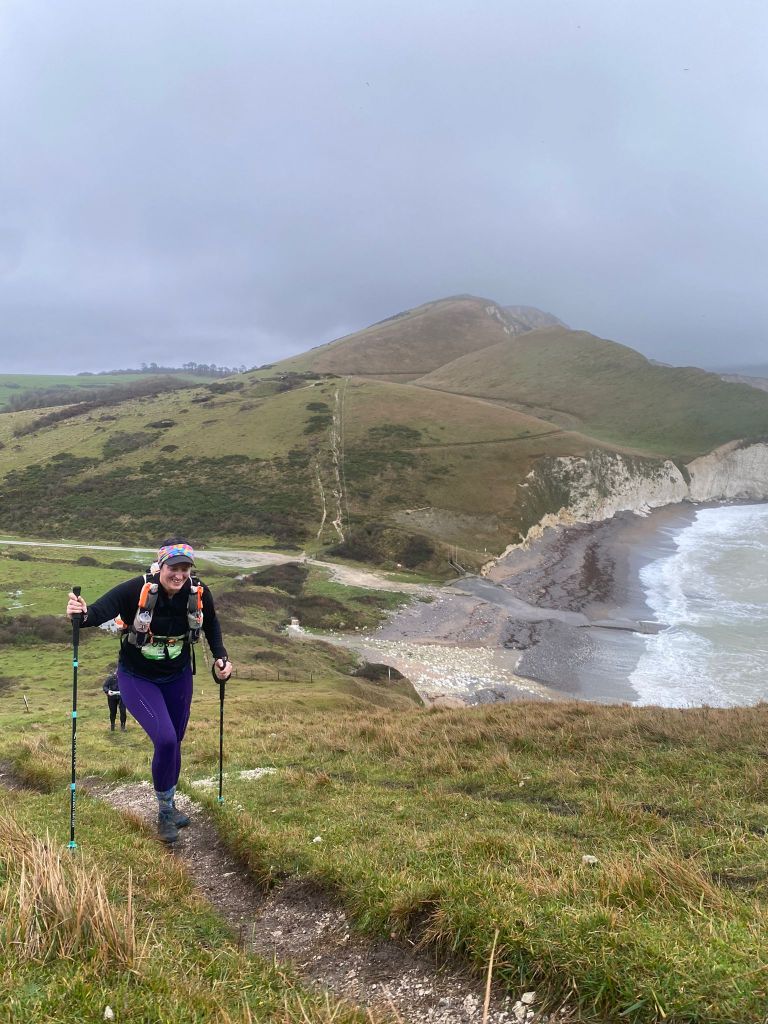
In December I ran my slowest ever marathon, but it was one that had tormented me for years. The EnduranceLife Dorset Marathon was a cold, slippery, windy affair, along the South West Coastal Path. In previous years I’d managed the half marathon, but I’d bailed on the marathon before.
Flanked by my fellow Dragon’s Back comrade Ben it took me a staggering nine and a bit hours to finish – but I goddamn finished the thing! That, my friends, is tenacity!
I’m working closely now with The Green Runners who align their running on core pillars of how we move, how we eat, and how we speak out. And with this platform I can speak out to some extent. To whoever might listen!
Yes, there are plans for this year – there’s a focus on me to speed up. And I’ve got a 45-miler Dragon reunion run firmly in the diary for August, and amongst all the training, and the aerial hoop, and the weights and strength workouts, they’ll be the continued message that I’m driving home; you can be happier and healthier and strong and awesome without having to plunder the planet and eat animals. So there.
And absolutely, I get enough protein and I’m not emaciated!!
Trying to encapsulate last week’s experience on the Dragon’s Back Race is like trying to bottle lighting, but then I like trying hard things so I’ll give it a go!
I’ve been waking up at strange hours – around 4am – which would have been when my alarm went off on camp; ready to grease my feet, check for blisters, deflate my sleeping mat and repack my camp bag, have my breakfast of hash browns, beans and vegan sausages, grab a banana, get my kit checked and make my way to the day’s start line.
Of course I don’t have to do that now, yet it feels like I’m grieving its absence. Not just the strange routine, but the people too.
The day before we got the bus up to Conwy and the start of the race, the weather had been pretty standard for the UK – end of summer, schools due to go back. It was turning autumnal, nights drawing in and the prospect of a perfect, temperate climate upon the mountain tops of Wales.
But much like what happened to me in 2022 for my Macmillan Way run, on the Monday a heatwave struck.
This impacted me, the other runners, and the event organisers, in ways that we hadn’t anticipated.
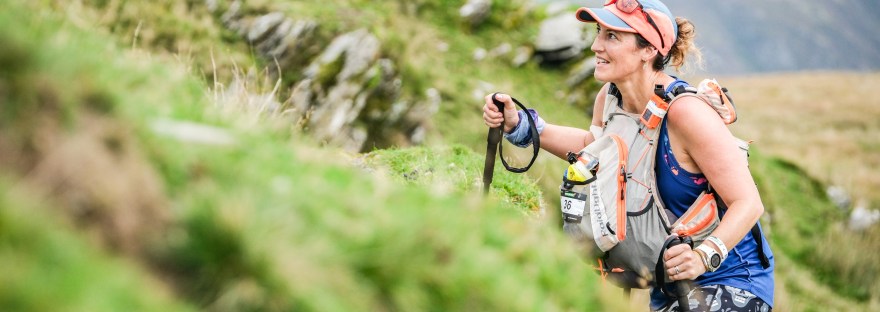
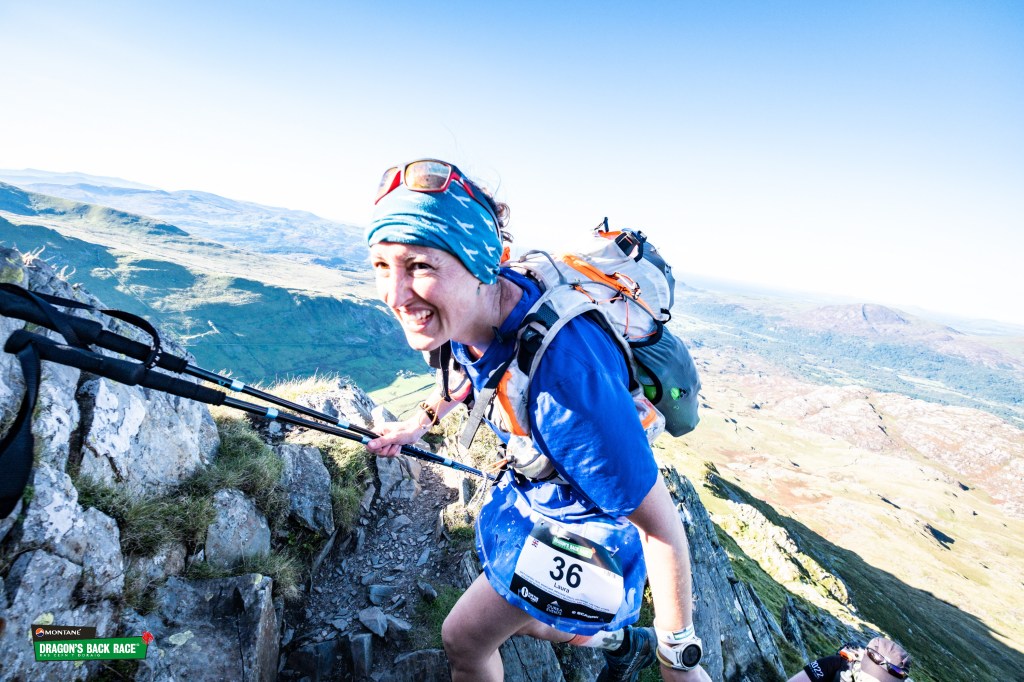
It meant that on day one, despite running well out of Conwy Castle and up to Tal Y Fan, as the sun came up and started beating down relentlessly by the time I reached Pen yr Ole Wen I was moving much slower. I could see the half way check point below me at Ogwen Support Point, but the time was slipping away.
I had options. I could bust a gut and still reach the cut off if I really ran like the wind. But if I did that I’d still have to face the climb of Tryfan and the Snowdon Horseshoe, most likely not make the next cut off, and inevitably ruin myself and scupper my chances of hanging in for the full six days. The other option was to take on the half route, which this year for the first time has been renamed “The Hatchling Course”.
To put it in context, the full Montane Dragon’s Back Race covers 380km (236 miles), and 17,400 metres of height gain (57,087ft). As a Hatchling, you can choose to either run the first or second half of the day – so still getting in some serious mileage and vert by the time you finish in Cardiff.
For many runners, day one saw them off. The heat was brutal and stripped them of all reserves. To drop down to the Hatchling was, for some, never an option. They were here to become fully fledged dragons. That was their only goal.
But plenty, like me, took stock and reassessed. We still had another five days to get to Cardiff, maybe even in a more enjoyable way now that we were running half the distance.
In fact what happened next was unprecedented – where in previous years those who’d attempted the dragon and failed early on would go straight home, this year saw 134 Hatchlings complete the event, and 87 complete the full Dragon’s Back.
Although 45% of the 298 didn’t make it to Cardiff this year, thanks to the option of the Hatchling, 195 of the 298 starters did make it.
As I sat at the day one halfway checkpoint at Ogwen, I recruited my first fellow Hatchling Alison. She was ready to quit. She told me she wanted to just sit on the mountain and not move until someone had come and got her. I asked her if she’d keep me company for the rest of the week, no pressure, and we’d try and make it to Cardiff together.
That promise proved to be the best move I’d make.
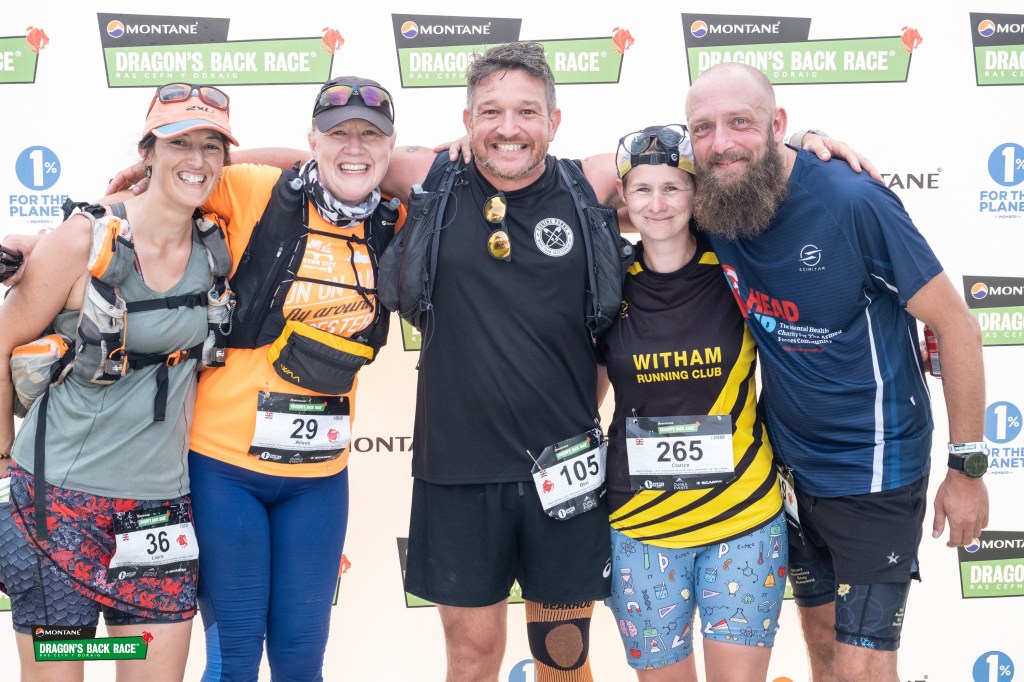
Later that day I learnt that two of my other friends (people become friends very quickly in situations like this) had also come back to the halfway checkpoint having been beaten by the steep climb on Tryfan. Clarice and Ben became the next two in our team of five.
Graham came next, on day two. He’d timed out on day one, but was going hell for leather again and we met him on a steep ascent early on in the day. He didn’t look his usual self and the five of us sat and took a moment together on Cnicht.
Revived, we continued on together as, what one described as “a strange version of the Fellowship of the Ring”, the photographer even capturing what would then go on to be our “poster shot”.
Throughout the next few days we’d continue to wake ridiculously early, check in and meet as a group ready for the start line, and if not run together, know that we’d be looking out for each other. There were times when we cried with laughter – bum sliding down hills, or making jokes that are only funny when you’re totally sleep deprived and exhausted. There were times when we gritted our teeth, finding something, somewhere that would pull us through the tough bits. Alison had a knee injury, so did Ben – which later transpired to be a torn meniscus; my shoulder kept cramping from the weight of the pack and constant use of poles, and Graham and Clarice, like all of us were just downright knackered.
At the end of our running shift we’d have to make sure our camp admin was bang on. Eat, wash in a cold river, get kit ready for the following day, charge devices, check our Dragon Mail from keen supporters, sleep. I had a wonderful bunch of tent mates too – I was in a tent of international super talents. The runners I shared with were absolutely phenomenal; the likes of Sanna Duthie, Silvia Trigueros Garrote, Caru Coetzee, Margarida Bagão, and Catharina Rennie. Feeling comfortable in your tent makes for a smoother experience, I can tell you.
We battled through the searingly hot days, carrying more water than we’d anticipated to (training runs were not geared to hot weather), and we continued, one foot in front of the other over mountain ranges including Cadair Idris and Bannau Brycheiniog (The Brecon Beacons), where shade evaded us and our only relief from the heat was to dip our clothing in the rivers.
A special mention has to go to the crew on this epic race. From the water stops and half way checkpoints to the catering staff, friendly faces at the finish line, those who put up the tents and ferried runners from place to place, and everyone in between. This race is a logistical puzzle and race director Shane Ohly (he’s over on my podcast!) worked through insane conditions to make everything come together. A display of epic teamwork both behind the scenes and in the foreground.
Crossing the finish line at Cardiff Castle (all five of us made it) was a surreal and emotional experience. To become a Hatchling had become something more than I’d anticipated. No longer did I see myself as a failed dragon; instead I’d worked through a whole host of emotions and doubts to come through to the end as something better.
The Dragon’s Back Race is not just a run. For me, certainly it was a life experience that I’ll never forget, and from which I now have friends who, sadly for them, may never see the back of me.
I can’t write this blog post without special mention AGAIN to RAW Adventures and their recces throughout the year, without whom, I can hand on heart say I would not have managed to complete the race to Cardiff. Their support has been invaluable and I would recommend anyone with an interest in mountains, running and adventure to get in touch with them
Next I have to tell you that entries are now open for Ourea Events Dragon’s Back race 2024. Whether you choose to take on the full dragon or the Hatchling I can tell you with certainty that you will not regret it.
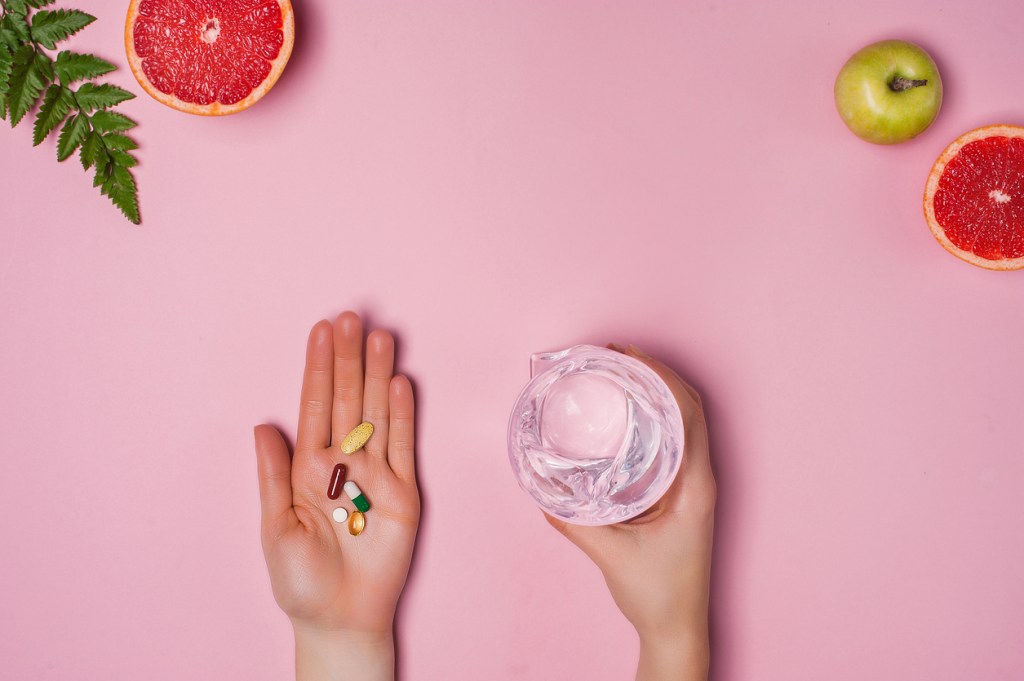
Where to get your vitamins without eating animal products
When I first stopped eating animal products (around six years’ ago now), there was a lot of concern from well-meaning relatives, as well as people who had no clue about me, as to whether I’d be getting enough “goodness” from my diet.
Surely, without eating dairy, my bones would break more frequently. Without getting B12 and D from meat, I’d be losing out on vital cognitive and physical strength and agility. I’d go pale, stop working, probably die.
Well then imagine my horror then when I did break my toe. Not once, not twice, but thrice (do we even still use that word?) I mean, sure the back to back ultras may have had some bearing on it – even the fact that I’d switch to barefoot running – but undoubtably the main factor was that I was eating plants. Surely.
So on break number three I bowed down to pressure and had a little word with the consultant. “Why do my bones keep breaking? Is it because I’m a vegan?” He ordered a blood test, shrugged a bit, and said he’d let me know.
Well folks, my vitamin levels were exemplary – tip top D, B12, iron, calcium. Nothing to worry about, the breaks were just one of those things that comes with overuse. Nothing more.
When one of my meat-eating relatives then got diagnosed with low folic acid and B12, I was mildly smug. But it got me thinking about where we need to get these vits from, especially that elusive B12.
It’s true to say that vegans do need to be mindful that they’re being healthy and not processed-food-happy – it’s really easy to reach for the meat alternatives and sweet chemical laden overly processed food. But if you eat a balanced diet, you’ll get all the nutrition you need, if you know what to eat.
I’m not going to lie – I take supplements, three to be exact: I take a brand called Floradix, which comes in liquid and tablet form and kind of covers most bases; I take a calcium with K2 (not the mountain) tablet, and I take D3. So far, they’ve stood me in good stead and I’ve not broken bones for some time!
I’m no doctor, but here are some things I’ve learnt along the way about important vits, what they do and where you’ll find them. Below are a list of common ones that people seem to think vegans don’t get much of!
CALCIUM
This is the bones booster. Dairy eaters will get calcium through milk and cheese, and even eggs, but it’s found in green leafy veg, soya, and in fortified foods too – think bread and plant-based milk. Calcium is best absorbed when it’s taken with vitamin C, so rather than chug it back with your morning coffee which actually inhibits its absorption, take it with a glass of orange juice for a bigger punch.
Interestingly I was advised to take calcium with K2 because there is a small risk when you take calcium that it can build up and leave calcium deposits in arteries and blood vessels.
VITAMIN K2
This was a fairly new one to me. When I started taking calcium I was told K2 has an essential role in building and maintaining strong bones, but also stopping unwanted build up of excess calcium where you don’t want it. It comes in different forms such as MK4 or MK7 and I take it as a combined calcium/Vitamin K2 tablet.
VITAMIN A
Also known as retinol – think of all those skin care products with it in – vitamin A is found in foods with good levels of Beta Carotene. It’s great for fighting off infections and boosting the immune system, keeping your eye health tip-top, and also for healthy skin. You’ll find it widely in yellow, red and green leafy vegetables. The likes of carrots, red peppers and sweet potatoes, and also in fruits like mangoes, papayas, and apricots.
OMEGA 3
Omega 3 is a type of unsaturated fat which is great for heart health and prevents against strokes and heart disease. I used to get told repeatedly I should take fish oil when I was younger, because that seemingly was the only place I’d ever get Omega 3 from. It’s not true though, you can get Omega 3 from nuts and seeds, vegetable oil, and from green leafy veg. Again, the message is to eat a balanced diet, and you’ll be sure to get your fix.
ZINC
Zinc is a overall health champion, it reduces inflammation, helps to heal wounds, and boosts the immune system. Found in beans, tofu, walnuts, chickpeas, wholemeal bread and even that Waitrose-shopper’s favourite, quinoa, there’s plenty of it out there and if you’re eating properly you should get it in your diet no worries.
PROTEIN
My favourite – “how on earth do you get enough protein if you don’t eat meat?” Well, I just eat.
Tofu, tempeh, peanuts (good job I love peanut butter), edamame, potatoes, beans, the list goes on. Oh, and micro-protein which increasingly is used in the likes of meat substitutes and is essentially a fungus-based protein – think mushroom not mould!
Protein is essential for repairing muscles and when you are an endurance athlete it’s all the more important for repair and recovery. If you’re beasting yourself time and time again running or doing strength work in the gym, then it’s a good idea to throw a protein shake in with your daily intake to boost this important nutrient.
VITAMIN D
Mood boosting and essential for wellbeing, I’m pretty sure we all notice how our minds can slump during the winter months when the sun isn’t providing us with our daily dose of vitamin D. It’s important for retaining calcium and for guarding against inflammation. For a vegan, here’s one of those that it’s worth taking a supplement for. Mostly in the summer months we’ll get all the D we get from the sunlight on our skin and a sensible diet, but certainly in the winter it’s harder to come by.
It’s worth noting that some foods are also fortified with vitamin D, so can be available in some spreads.
B12
A lack of B12 or folate deficiency can lead to anaemia, general weakness and lethargy. The trouble with B12 is it’s one of those pesky vitamins that’s pretty hard to come by. B12 used to be more readily available when we didn’t religiously wash the soil off all our fruit and vegetables, as it’s found in traces in soil microbes. As a vegan, it’s worth taking a B12 supplement, and the NHS actually recommends it, because it’s much trickier to find it in your food.
IRON
Used for growth, and making haemoglobin, the protein in red blood cells that carries the oxygen around, an iron deficiency can come about if you’re not getting enough in your diet, or if you lose a lot of blood during your period. In order to stay in top working order and not feel fatigued and weak, you can find all the iron you need in your diet from the likes of nuts, kidney beans, dried fruits and fortified breakfast cereals.
To surmise, you can get pretty much all the nutrients you need from a well-balanced vegan diet – you can even run silly distances, as proved in an earlier post on Vegan Ultra Running. I’d seriously think about a D and B12 supplement, but this is all personal choice. And of course, ALWAYS seek the advice of a healthcare professional if you are thinking of changing your diet or worried about any health issues.
I’ve got into the groove this week with a more positive mindset and efforts to do some meaningful training. I’m telling myself over again that this is my race, and my race only. Mild panic set in previously from reading other comments from incredible fell runners who make mountain running look easy, and I wondered if I was in way over my head even attempting the Montane Dragon’s Back Race this year.
I’ve sat down with a Mountain Leader/navigation guru, and we’ve made plans for a Brecon Beacons recce. I’ve got two weekends in the diary for recce events with Raw Adventures that cover sections of the Dragon’s Back. I’ve starting hill training, strength training, and understanding that I need to run most days again.
One positive move I made was sitting in on a webinar with Shane Ohly (race director), and former participants Kirsten Isak, and Ben Morris. Since watching, I’m breathing a few sighs of relief.
I had this overriding concern that in order to complete DBR I’d need to be a navigation ninja. I’m now reassured that it’s not necessarily the case. A GPX file is given to participants, and there is an event map; but I don’t rest on my laurels – my Brecons training will hopefully hone my skills with a compass and a map, because let’s face it, I don’t want to be reliant on a breadcrumb trail when I’m facing the elements and the Welsh mountains.
Dutch former-DBR participant Kirsten agrees that running with a map and compass is a great idea. Picking a line saves you time and effort.
The second piece of information to really put my mind at ease a little is learning that the marketing images of DBR (the ones where runners are picking along a stretch of spine-like mountain with a seemingly deathly drop) along the technical bit known as Crib Goch, is actually only 300 metres long. Race Director Shane reassured that tens of thousands of tourists go there, you can’t get lost along that bit, and most people don’t die!
The really exciting piece of news for me is the details on the food. Breakfast and dinner is provided! Cooked as well – unless you’re after the likes of muesli and cereal. For the record, I’m all about the food. My philosophy is eat like you don’t know where your next meal is coming from!
My sticking point currently is which footwear I need. My diehard barefoot friends say that my Vibram Fivefingers should be allowed, and would recommend I stick with those, however Eleanor Clarinbold of Dragon’s Back Race recommends something more robust, given the extreme terrain. I’m going to have to do lots of testing and getting out there to find out what I feel most confident in. Both Ben Morris and Kirsten Footwear say footwear is massively important – the biggest thing to get right. They suggest three or four pairs – a camp pair to use for running on road, that’s comfy and roomy, and something tight and grippy for rocky days. A trail shoe, for obvious reasons. But I want to throw barefoot in there too, for times when the terrain isn’t so brutal. After all, it’s what my feet know.
It’s great to hear from a former female participant. Kirsten herself even says it’s a shame more women don’t enter. Part of the reason I’m documenting my journey – to encourage more women to take the plunge and take on the Dragon.
Extra handy Dragon hacks from Shane, Ben and Kirsten:
Give some serious consideration to your sleeping mat (don’t save weight on this!) Get a good one.
Test your kit rigorously beforehand.
Pack two head torches – one for camp that you don’t have to worry about packing for the run
Less kit in camp is better.
Sort your food rations and label them for each day.
Keep it simple. Don’t give yourself to worry about.
Pack the night before so you’re not rushing in the morning.
You can watch the Dragon’s Back webinar with Shane, Kirsten, and Ben, here
I used to get told fairly frequently that I wouldn’t have the energy to sustain a long run if I just ate a vegan diet. That was when the notion of running a really, really long way for charity was just the seed of an idea.
The likes of Eddie Izzard had run multiple marathons to raise money, and countless celebrities had scaled mountains and traversed anaconda-infested waters for worthy causes, so why on earth couldn’t I do something equally as ridiculous?
In July I became the first person to run The Macmillan Way – which runs from Boston in Lincolnshire, to Abbotsbury in Dorset. The route itself is just shy of 300 miles, but I sure as hell ran at least that. And guess what? I’m a vegan, and I did it without any injuries. A couple of blisters were the most I had to complain about – and a lack of sleep, and of course a lack of anyone to talk to for miles, and miles, and miles.
So how does anyone run that far on a diet that consists of plants? Pretty well, it turns out. Look at the likes of Fiona Oakes and Scott Jurek (all hail and praise be – these are two of some the most phenomenal vegan ultra-runners), and it’s enough to realise that meat and animal produce does not equate to energy or strength.
Mindset was the biggest hurdle for me. Running that far on my own, for the first time in my life, and over terrain that I hadn’t recce’d before, meant that my brain gave me more agro than my body.
I had to force myself out of bed – for all but one night that was in a VW camper van called Arthur II. The one night Arthur didn’t provide my shelter was only because we parked up in the space outside a mate’s workshop, so I had a mattress on the floor. I was up at 4am, and out the door within an hour. And I had to force down food. Pasta with tomato sauce, new potatoes covered in salt and olive oil, luke-warm cauliflower bites, chips, bananas, bananas, bananas, oh, and nectarines. My crew, consisting of my husband, more often than not wouldn’t have time to boil the kettle in time for my next check point and I craved a cup of tea, ALL THE TIME. So instead, it was cans of coke and cold stuff and vegan Magnums.
I was running in the height of the summer. The heatwave had been turning the grass to tinder just the week before, but it hung in the air, so it was like running under a pinned-down duvet. I felt like a boil in the bag meal, slowly cooking in my skin. The nectarines were my little taste of heaven when I needed hydration but couldn’t take on any more drink.
The overdosing on fruit then had its own repercussions. Needing to hide behind every available bush each time I took on any food or drink became a hideous necessity, and it was incredibly wearying. It sapped me of even more energy, but I had enough in the bank.
The hills of the Cotswolds and Somerset, and the latter hills through the Dorset countryside and right up to the finish line had it in for me. I’d trained for the distance, but not for the elevation, and on day two I wondered what the bejeezus I’d let myself in for.
I was doing this for a reason. I was running for Macmillan Cancer Support – check out the Just Giving lowdown on that, and so I knew I wasn’t going to give up.
I ran it in six days, 13 hours, nine minutes and 42 seconds. Go on, check it out on http://www.fastestknowntime.com – it’s there, in black and white!
So, in a nutshell (nuts were consumed wildly, too), I did it on sheer grit and determination, a very sensible eating plan, which consisted of all the food – rice, pasta, Active Root sports drink, a bit of luck, and a lot of support!
Following that run, I am here to share the great news that as a vegan you are not at a disadvantage physically (in case anyone was still under that impression), and to talk about all things vegan, fitness and running. HURRAH.









 Vegan Fitness Runner